
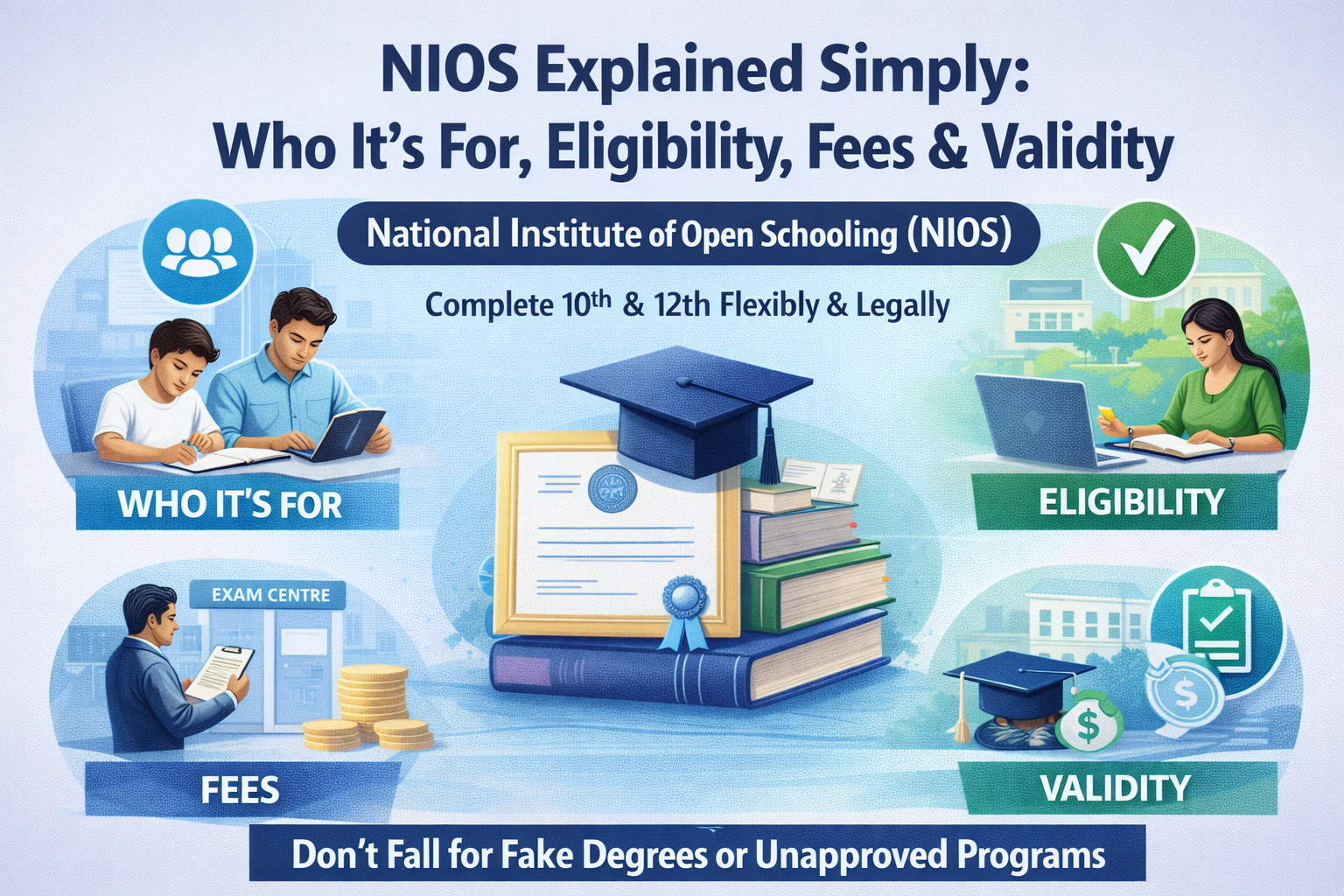
NIOS Explained Simply: Who It’s For, Eligibility, Fees & Validity

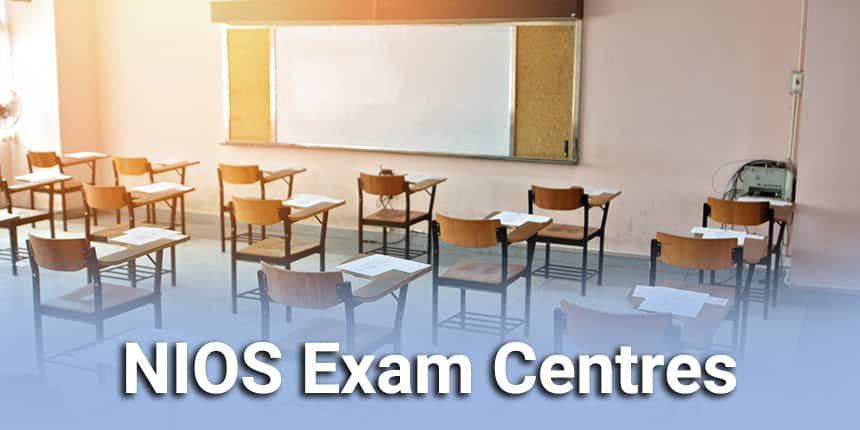
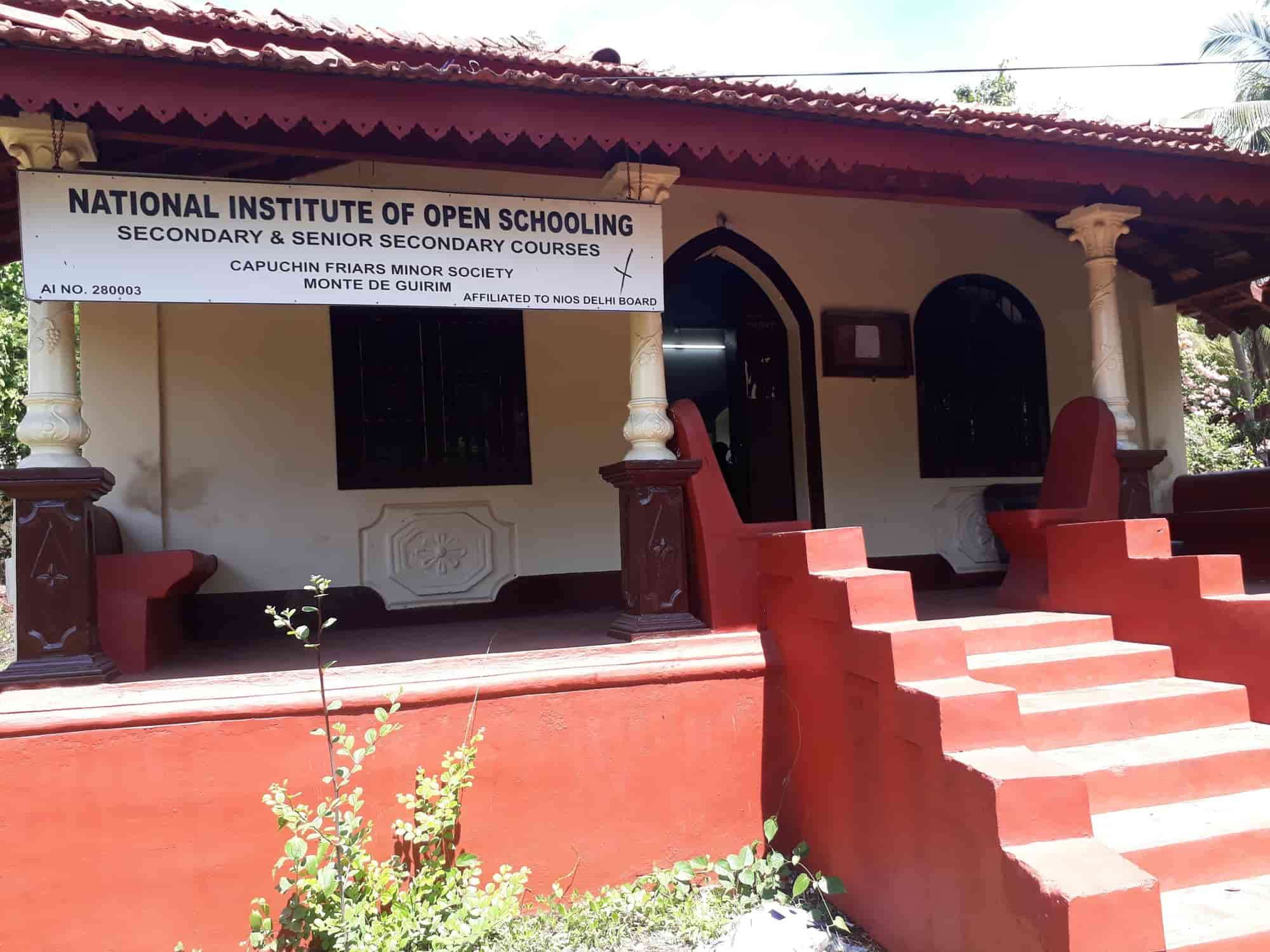
If you couldn’t complete school through the regular system, NIOS is not a shortcut — it’s a second chance.
The National Institute of Open Schooling (NIOS) is a government-recognized education board that allows students to complete 10th and 12th legally, flexibly, and at their own pace.
This guide explains NIOS in simple terms — who it’s for, eligibility, fees, and whether it’s actually valid.
What Is NIOS? (In Simple Words)
NIOS is an open schooling system under the Ministry of Education, Government of India.
It is designed for students who:
- Dropped out of school
- Failed multiple times
- Had financial, health, or personal issues
- Need flexibility due to work or family responsibilities
NIOS gives you a recognized school certificate, not a private diploma.
Who Is NIOS For?
NIOS is ideal if you are:
- A school dropout (10th or 12th incomplete)
- Someone who failed in CBSE/State Board
- A working individual who can’t attend regular school
- A learner restarting education after a long gap
NIOS is not meant for students looking for an “easy pass”. You still need to study and clear exams.
NIOS Eligibility and Fees
NIOS Eligibility Criteria
For Secondary (10th)
- Minimum age: 14 years
- No prior qualification required
For Senior Secondary (12th)
- Minimum age: 15 years
- Must have passed 10th from a recognized board (including NIOS)
There is no upper age limit.
Subjects & Study Pattern
- You can choose up to 5 subjects
- Exams are conducted twice a year
- Credits remain valid for up to 5 years
- You can pass subjects one by one (huge advantage)
This flexibility is why many dropouts succeed in NIOS.
NIOS Fees (Approximate)
NIOS is far more affordable than private schools.
- 10th or 12th registration: usually ranges from ₹1,500 to ₹3,000
- Exam fees are paid per subject
- Books are available free in PDF format
Exact fees may vary slightly by region and exam cycle.
Is NIOS Valid in India?
Short answer: Yes. Completely valid.
NIOS certificates are accepted for:
- Higher education (college admission)
- Government jobs (as per eligibility rules)
- Competitive exams
- Private sector employment
NIOS is treated at par with CBSE and State Boards.
Anyone telling you otherwise is either misinformed or selling something.
What You Can Do After NIOS
After completing 10th or 12th from NIOS, you can:
- Enroll in regular colleges
- Choose online or distance degrees
- Apply for government jobs
- Pursue skill-based programs
- Restart your academic journey properly
NIOS is not the end — it’s the restart point.
Common Myths About NIOS (Debunked)
Myth: NIOS is not accepted
Fact: It is government-recognized
Myth: NIOS is only for weak students
Fact: It’s for students who need flexibility, not lower standards
Myth: Colleges reject NIOS students
Fact: Reputed universities accept NIOS certificates
How College Sarathi Foundation Helps With NIOS
At College Sarathi Foundation, we work with students who feel stuck, not students chasing labels.
We help you:
- Check eligibility correctly
- Complete error-free NIOS registration
- Select the right subjects
- Avoid fake agents and misinformation
- Plan what to do after NIOS (college, degree, skills)
NIOS works best when done with clarity, not confusion.
Final Reality Check
NIOS won’t magically fix everything.
But it legally puts you back in the education system.
If regular school didn’t work for you once, forcing the same system again won’t help.
NIOS exists precisely because life isn’t linear.
Used correctly, it can change your trajectory.


About author








Add comment
You must be logged in to post a comment.