
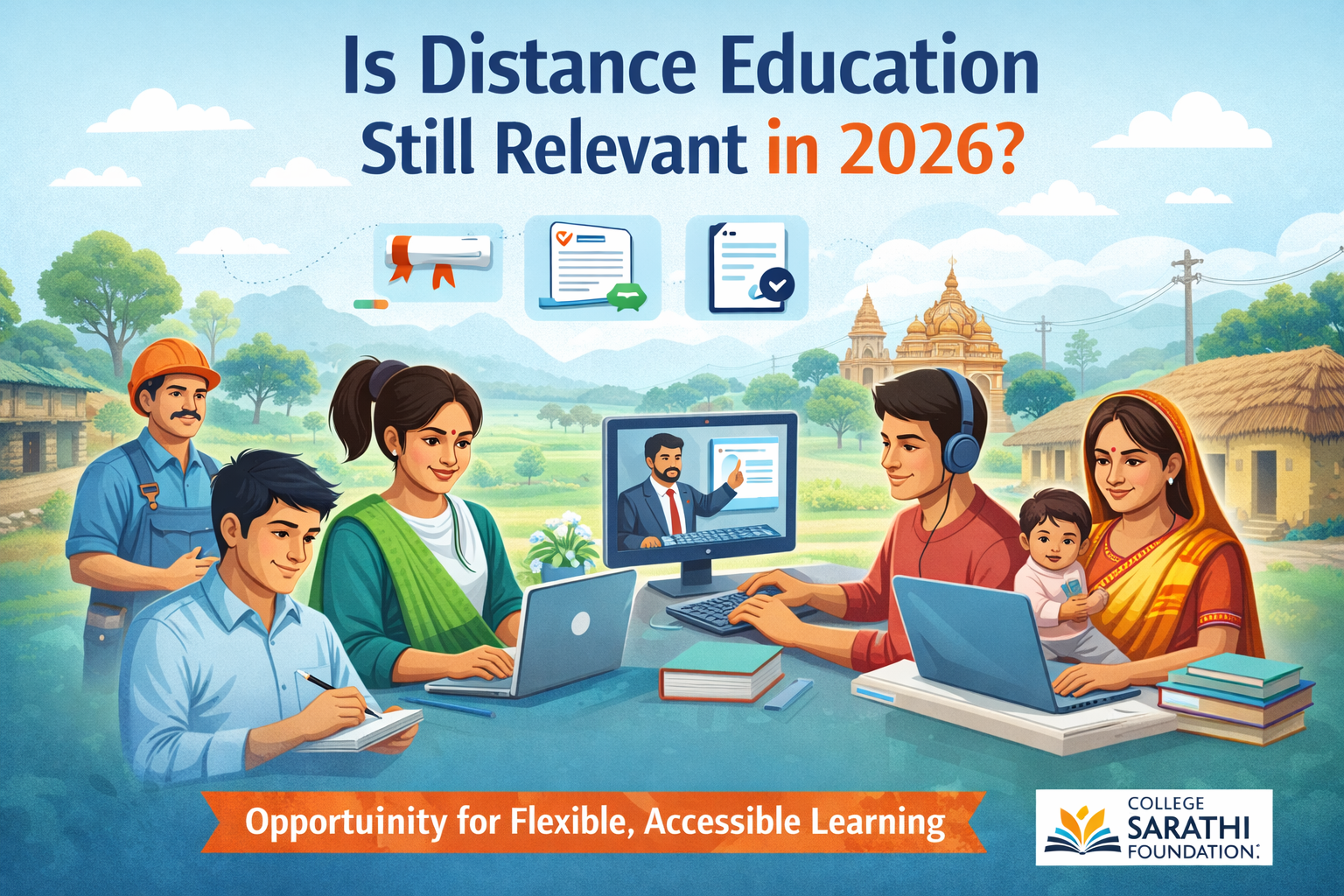
Is Distance Education Still Relevant in 2026?
Is Distance Education Still Relevant in 2026?
Education in India has changed more in the last decade than it did in the previous fifty years. With online platforms, hybrid learning models, and skill-based programs becoming common, many students and parents now ask an important question: Is distance education still relevant in 2026?
This question usually comes from confusion, not from facts. Distance education has been around for decades and continues to serve a large section of learners who cannot access regular college education. In 2026, distance education is not outdated — but its relevance depends on who the learner is and what their goals are.
This article explores where distance education stands today, who it is meant for, and how it fits into the current education system.
Understanding Distance Education in Today’s Context
Distance education refers to academic programs where students do not attend daily on-campus classes. Learning happens through:
• Printed or digital study material
• Recorded lectures
• Assignments and internal assessments
• Term-end examinations conducted online or at designated centers
Unlike short-term online courses, distance education leads to formal degrees and diplomas offered by recognized universities.
In India, distance education is regulated and monitored, making it a structured and legitimate mode of learning rather than an informal alternative.
Why Distance Education Still Matters in 2026
Despite new learning models, distance education continues to be relevant because access to regular education is still unequal.
Many learners face challenges such as:
• Financial constraints
• Family responsibilities
• Early entry into the workforce
• Health or mobility issues
• Living in rural or remote areas
Distance education provides these learners a way to continue their education without being excluded from the system.
Distance Education vs Regular College: A Practical Comparison
Regular college education works well for students who:
• Can attend classes full-time
• Have access to urban campuses
• Can afford higher tuition and living costs
Distance education works better for students who:
• Need flexible study schedules
• Are earning while learning
• Took a break from studies earlier
• Want a second chance at formal education
In 2026, both systems exist for different needs, not as competitors.
Who Should Consider Distance Education in 2026?
Distance education remains especially relevant for:
Working Professionals
Many individuals start working early due to financial responsibilities. Distance education allows them to earn a degree without leaving their job.
School Dropouts and Gap-Year Students
Students who had to discontinue education due to personal or economic reasons can return through distance learning and complete their qualifications.
Women with Household Responsibilities
Distance education continues to play an important role for women who manage family responsibilities and cannot attend regular colleges.
Students from Rural or Underserved Areas
Limited access to colleges and coaching institutions makes distance education a practical option for learners in remote regions.
Is Distance Education Recognized and Valid in 2026?
Yes, distance education degrees offered by recognized universities are valid in India.
Degrees awarded through approved distance education programs are accepted for:
• Higher studies
• Competitive exams (subject to eligibility criteria)
• Private sector jobs
However, recognition depends on:
• The university offering the program
• Approval from regulatory authorities
• Program structure and duration
Students must always verify these details before enrolling.
Distance Education and Employment Opportunities
Although often confused, distance education and online education are not identical.
• Distance education is a long-established system focused on self-paced learning with formal exams.
• Online education relies more on live classes, digital platforms, and continuous engagement.
In 2026, both models coexist. Distance education remains relevant because it is:
• More affordable
• Less dependent on high-speed internet
• Accessible to a wider population
Challenges Faced by Distance Education Students
Distance education is not without challenges. Some common difficulties include:
• Limited peer interaction
• Need for self-discipline
• Lack of daily academic structure
• Misunderstanding about degree validity
These challenges can be managed with proper guidance, planning, and support systems.
Role of Support Organizations in Distance Education
One major reason students struggle in distance education is lack of guidance, not lack of ability.
Support organizations and education foundations play an important role by:
• Helping students choose the right program
• Clarifying eligibility and recognition
• Assisting with admissions and documentation
• Providing academic and emotional support
With the right support, distance education becomes far more effective and less overwhelming.
Is Distance Education a Good Choice for Higher Studies Later?
Distance education can be used as a stepping stone for:
• Further studies
• Skill-based certifications
• Career transitions
Many universities and institutions evaluate degrees based on:
• Recognition
• Completion status
• Academic consistency
Distance education does not automatically block future opportunities when chosen carefully.
The Social Impact of Distance Education
Distance education is not just an academic option — it is a social equalizer.
It allows:
• First-generation learners to earn degrees
• Adults to restart their education journey
• Economically weaker sections to access higher education
In a country like India, this role remains deeply relevant in 2026.
Conclusion
Distance education in 2026 is not outdated, unnecessary, or irrelevant. It is purpose-driven education meant for learners who need flexibility, affordability, and accessibility.
The key is not whether distance education is good or bad — the key question is whether it fits the learner’s situation and goals.
When chosen thoughtfully, distance education continues to open doors that would otherwise remain closed.
If you or someone you know is unsure about continuing education due to financial, personal, or social challenges, distance education can be a practical and valid path forward.
College Sarathi Foundation works to guide learners through informed, transparent, and responsible education choices.
Reach out to understand which education option truly fits your situation — because continuing education should feel possible, not confusing.

About author



Add comment
You must be logged in to post a comment.